In today's rapidly changing information age, the Information Warfare Center plays a key role. It not only displays important real-time information but also directly integrates related status information items, including:
➢ Real-time Data, Short-term Data, and Long-term Data functions provide comprehensive data support.
➢ Direct access to related monitoring items displays various types of detection data, detection statuses, data analysis, and alert messages for precise monitoring.
➢ In the Information Warfare Center structure, all information equipment and network behaviors are closely related, ensuring system integration and tracking.
➢ Clear relational structures not only allow the maintenance team to quickly connect but also enable system personnel to precisely identify problems when searching for issues.
Practical examples include user application software to firewalls (Firewall), load balancers (Load Balance), application servers (AP Server), database servers (DB Server), storage systems (storage), and intermediate network devices or web filters,
showcasing multi-level display interfaces from the surface to the finest layers, effectively grasping system relationships and potential risks.
The automated analysis system's relational structure can demonstrate the interlocking relationships between systems through topology maps or relational links, providing strong support for system managers or maintenance personnel.
Especially during debugging and tracking (Debug) analysis stages, it becomes an indispensable tool.
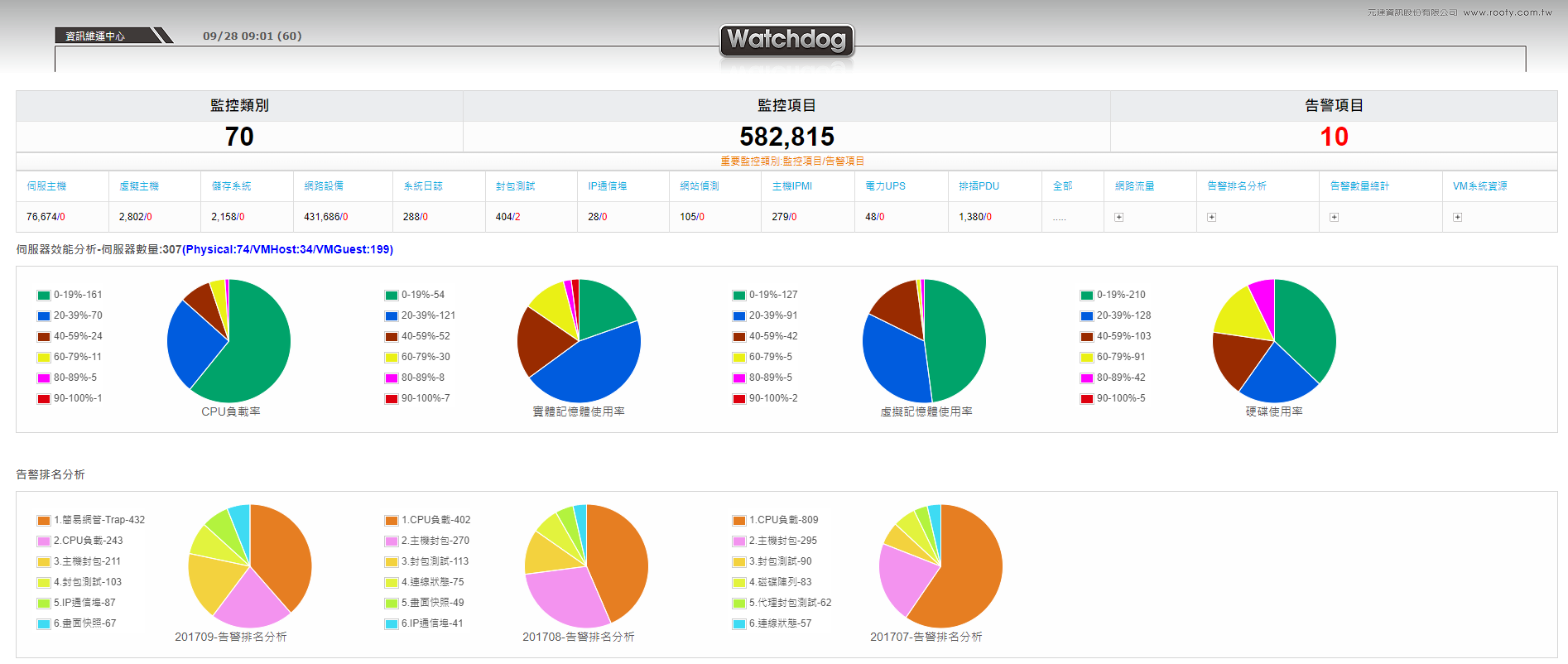
When system managers or maintenance personnel need to clarify or analyze the relational structure of their systems,
they can expand from the core issue of the event, conducting in-depth analysis of the relationships between operating systems, application systems, system resources,
and the dependencies of network behaviors and network equipment (such as switches, firewalls, load balancers, etc.), establishing a basic model for searching and analyzing.
The "Real-time Information Warfare Center" not only provides an intuitive graphical interface,
but also allows system managers and maintenance personnel to more easily explore system information and network relationships, identifying potential risk factors,
thereby transitioning from passive problem response to proactive crisis management, reducing the occurrence of alert events.
Particularly when system personnel enter the debugging and tracking (Debug) analysis stage,
they can use multi-level display interfaces to precisely locate issues from the surface to the finest details.
In the information center, servers are the core of system control, requiring clear monitoring of various equipment and performance. Common monitoring objects include server hardware, server performance, disk I/O performance, operating systems, application systems, processes, and network-related equipment. These devices include switches (Switch), firewalls (Firewall), load balancers (Load Balance), storage systems (Storage), power distribution units (PDU), uninterruptible power supplies (UPS), and system logs (Syslog), etc. Having a complete infrastructure and maintenance big data is key, providing maintenance engineers with the foundation for detailed maintenance analysis and monitoring, helping to maintain optimal operation of information systems and supporting outsourced information technology services.